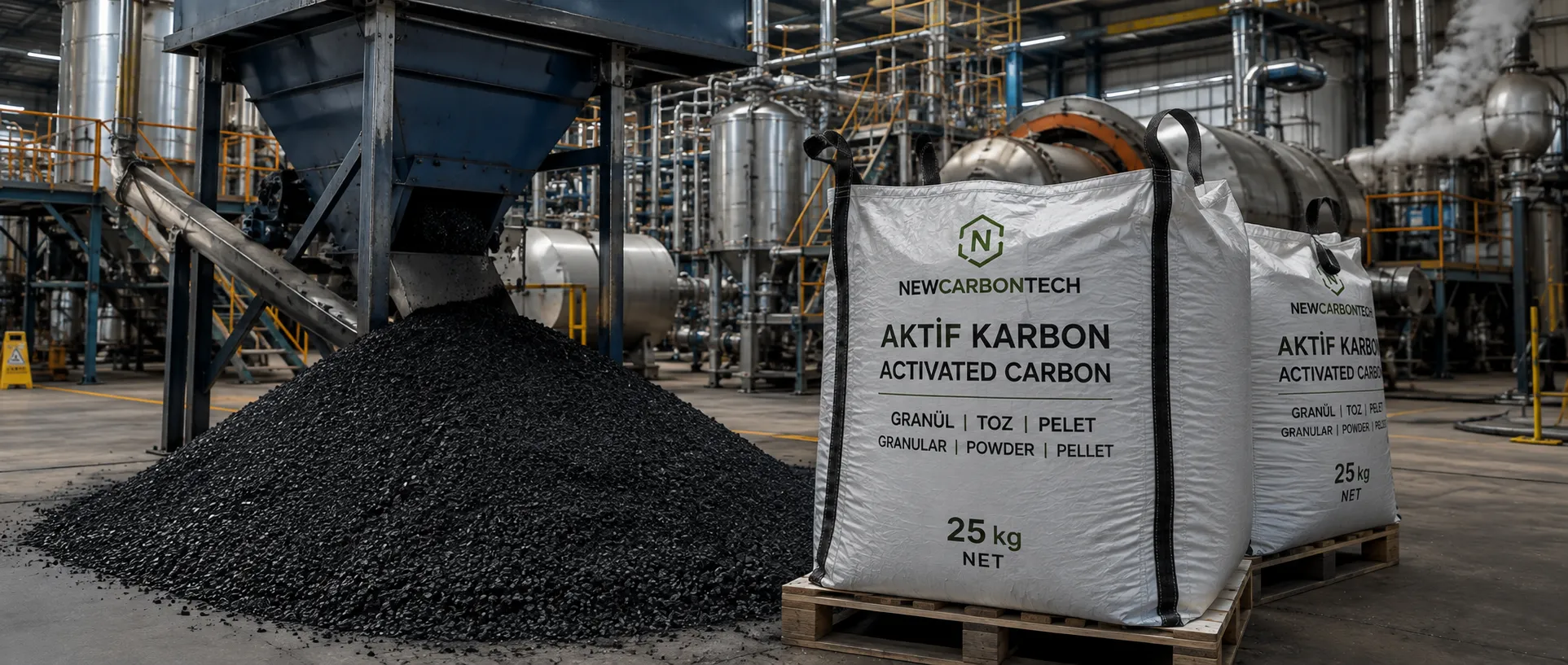
Pelletized Activated Carbon: The Standard for Air and Gas Treatment
Pelletized activated carbon is produced by kneading powdered carbon with a binder, extruding it into cylindrical form, and then activating it. The regular cylinder geometry gives it two unmatched properties in gas-phase applications: very low pressure drop and very low dust release.
Why pellets for gas phase?
In air and gas lines, fan energy is a major operating cost. While the irregular particles of granular carbon resist flow, the orderly packing of pellets lets gas pass through the bed with minimum resistance. The hard, glossy pellet surface also produces almost no dust during transport and filling — a critical hygiene advantage in facilities with sensitive equipment.
CTC activity: the iodine number of the gas phase
For gas-phase carbons the capacity indicator is CTC (carbon tetrachloride) activity. CTC values in the 55–70 percent range show the carbon’s capacity to capture volatile organic compounds. Demanding applications such as solvent recovery call for CTC above 60 percent.
3 mm or 4 mm?
| Diameter | Strength | Typical use |
|---|---|---|
| 3 mm | Faster adsorption kinetics | VOC capture, solvent recovery, process air |
| 4 mm | Lower pressure drop | Biogas upgrading, high-flow odor control towers |
The rule: as flow rate rises and beds get deeper, move to the larger diameter; stay small when kinetics are critical.
Typical applications
- Solvent vapor capture in paint booths and print houses
- Odor removal at wastewater plants and sewer vents — usually with KOH-impregnated pellets
- H2S and siloxane cleanup from biogas
- Industrial flue gas lines
Browse our pellet product family and contact us with your flow rate and contaminant data for bed sizing support.