What Is Hard Carbon? The Key Material of Sodium-Ion Batteries
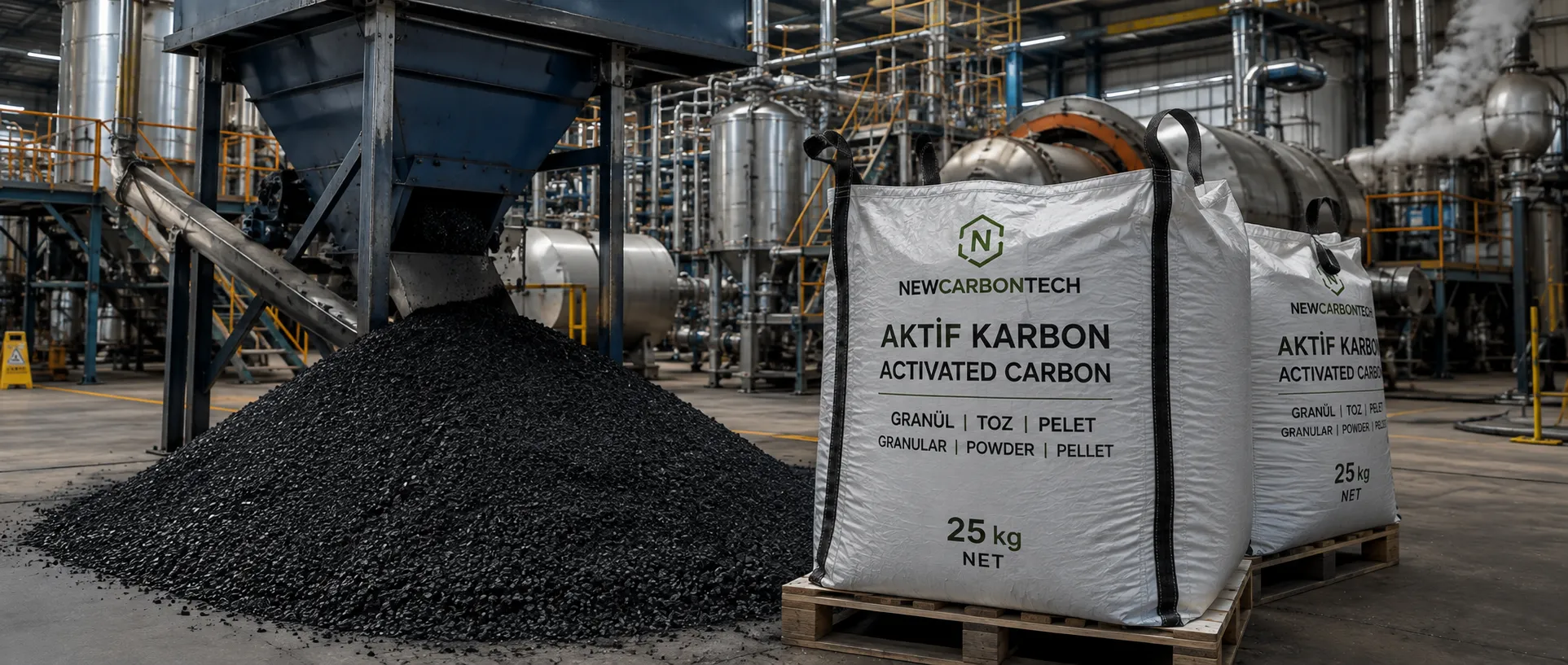
At the heart of sodium-ion batteries — the rising star of energy storage — sits a little-known material: hard carbon. Though it can be produced from the same feedstock as activated carbon, it serves an entirely different purpose: it does not capture contaminants, it stores energy.
What makes hard carbon special?
When carbon materials are heated, most tend to arrange their atoms into ordered layers and turn into graphite. Hard carbon resists this tendency: even heated to 3000°C, it will not graphitize. That is where the hardness in its name comes from — its structure stays disordered in defiance of thermodynamics. This disorder produces a unique architecture of curved graphene fragments, nano-voids and widened layer spacings.
Why do sodium-ion batteries want hard carbon?
The anode of lithium-ion batteries is graphite; lithium ions slip easily in and out between graphite layers. The sodium ion, however, is roughly 25 percent larger than lithium and does not fit between graphite layers — a graphite-anode sodium battery simply does not work in practice. Hard carbon’s widened spacings and nano-voids can store sodium ions both between layers and inside pores. That is why the de facto anode material of sodium-ion cells is hard carbon, with typical capacities in the 250–350 mAh/g range.
The coconut connection
One of the most common feedstocks of commercial hard carbon is the coconut shell we know from activated carbon. The difference is the process: in activated carbon the goal is opening pores, in hard carbon it is building the right microstructure through controlled carbonization. High-temperature treatment, low impurities and a narrow particle size distribution — those are the three requirements of battery grade.
Activated carbon vs hard carbon at a glance
| Property | Activated carbon | Hard carbon |
|---|---|---|
| Purpose | Adsorption (capturing contaminants) | Energy storage (anode) |
| Surface area | Very high (1000+ m²/g) | Kept low |
| Critical specs | Iodine number, hardness | Capacity, first-cycle efficiency, D50 |
| Market | Water, air, food, mining | Battery manufacturers |
The sodium-ion market is growing fast with grid storage and entry-segment electric vehicles. We are developing our hard carbon product family to supply this chain — with battery-grade powder and precursor options. We would be glad to meet your cell development team.