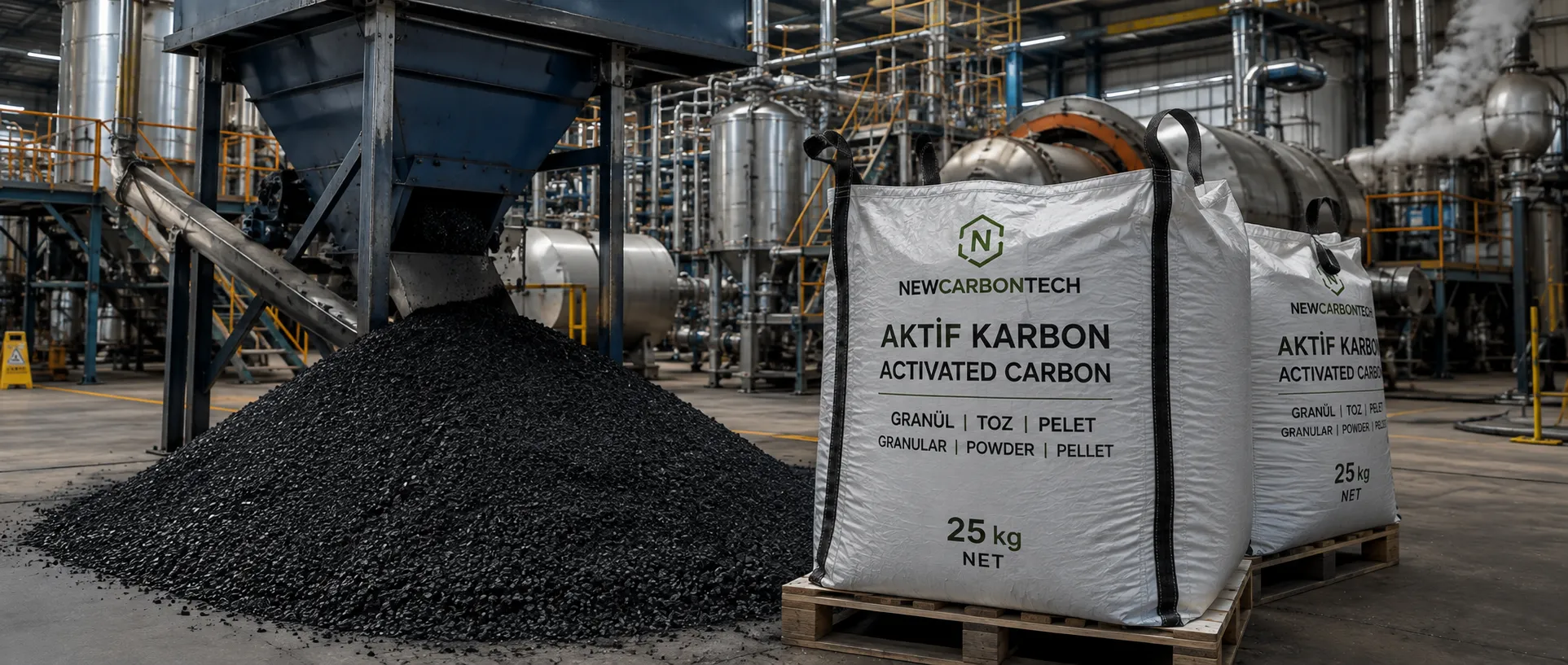
Silver-Impregnated Activated Carbon: The Guardian of Drinking Water Filters
A water filter paradox: the carbon bed that captures contaminants can, over time, turn into a perfect breeding ground for bacteria feeding on the organics it has collected. While cleaning water, the filter itself becomes a source of microbiological contamination. The solution to this well-known problem of household filters is loading trace amounts of silver onto the carbon.
How silver works
Silver ions have a strong bacteriostatic effect: they bind to bacterial cell membranes, disrupt enzyme systems and stop reproduction. The purpose of silver-impregnated carbon is not to kill bacteria in the water — the contact during flow is far too short — but to prevent bacterial colonization inside the carbon bed. The distinction matters: silver carbon is not a disinfection step; it is the filter’s self-protection mechanism.
Typical silver ratios
| Loading | Use |
|---|---|
| 0.05 percent | Standard household filter cartridges |
| 0.1 percent | Heavy use, hot climate regions |
Loading is applied to coconut-based granular carbon; its micropore structure is ideal for both chlorine removal and taste-odor polishing. One cartridge thus combines two functions.
Safety: does silver leach into the water?
In properly produced silver carbon, the silver is stably bound to the carbon surface; release into water stays far below the limits set by drinking water standards. Quality control rests on two critical tests: silver loading homogeneity and the leaching test. The most common defect of cheap, uncertified products is high silver release in the first liters.
Where is it used?
- Under-sink and pitcher-type household filters
- Water dispensers and vending systems
- Caravan, boat and travel filters — protection becomes critical during stagnant periods
- Emergency and disaster water kits
If you manufacture filters, review the specifications of our silver-impregnated product; for OEM production we tune silver ratio and mesh range to your cartridge design.